A wash basin gets a much harsher daily workout than its appearance suggests. Toothpaste dries on it, soap leaves residue, hard-water droplets remain after every use, bottles get placed on the rim, and occasionally something slips from a shelf above. A basin material therefore has to do more than look attractive under bathroom lighting.
This is where ceramic and glass basins differ significantly.
A ceramic wash basin offers a familiar glazed surface, broad design choice and relatively forgiving everyday maintenance. A glass basin can create a striking, lightweight appearance, particularly as a countertop bowl, but fingerprints, water spots and mineral deposits tend to be more noticeable.
For most Indian family bathrooms, a good-quality ceramic basin is generally the better all-round choice. Glass basins make more sense in powder rooms, guest bathrooms and design-focused spaces where appearance is prioritised and usage is relatively controlled.
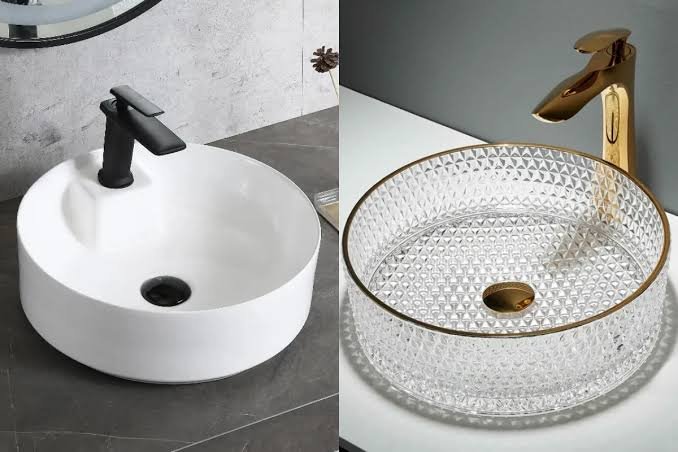
Ceramic Basin vs Glass Basin: Quick Comparison
| Factor | Ceramic Wash Basin | Glass Wash Basin |
|---|---|---|
| Appearance | Classic to contemporary | Decorative and distinctive |
| Design variety | Very high | Good, especially vessel bowls |
| Daily maintenance | Easier | Requires frequent wiping |
| Water spots | Less obvious on many finishes | Usually more visible |
| Hard-water marks | Can occur | Often highly visible |
| Impact tolerance | Strong but can chip/crack | Requires greater impact care |
| Scratch visibility | Generally low | Can become noticeable |
| Stain resistance | Excellent with quality glaze | Excellent on intact glass surface |
| Cleaning products | Relatively forgiving | Greater care advisable |
| Family bathroom | Excellent | Less practical |
| Powder room | Excellent | Excellent |
| Countertop installation | Excellent | Very popular |
| Wall-mounted options | Widely available | Less common |
| Price range | Very wide | Varies considerably |
| Best for | Everyday home use | Decorative low/moderate-use areas |
What Is a Ceramic Wash Basin?
In everyday bathroom terminology, a ceramic basin generally refers to sanitaryware made from ceramic materials such as vitreous china and finished with a smooth glazed surface.
The firing process creates a hard sanitaryware body, while the glaze provides the familiar smooth exterior.
Ceramic basins are available in almost every common installation style:
- Countertop
- Tabletop
- Wall-mounted
- Under-counter
- Semi-recessed
- Pedestal
- Semi-pedestal
This flexibility is one of ceramic’s biggest advantages.
A homeowner can change the bathroom layout without necessarily changing basin material.
Best for: Family bathrooms, master bathrooms, guest bathrooms and almost any area where easy everyday maintenance matters.
What Is a Glass Wash Basin?
A glass wash basin is usually manufactured from specially processed glass, commonly toughened or tempered depending on the product.
Glass basins are particularly associated with countertop or vessel designs.
They can be:
- Clear
- Frosted
- Tinted
- Textured
- Coloured
- Patterned
Unlike a conventional white ceramic basin, glass can interact strongly with bathroom lighting.
A transparent or coloured bowl can therefore become a major decorative feature.
Best for: Powder rooms, guest bathrooms and decorative vanity areas where visual impact is a priority.
Which Looks Better?
Glass has the advantage when the goal is to make the basin itself a statement piece.
It can appear:
- Light
- Contemporary
- Artistic
- Luxurious
- Unusual
Lighting can pass through or reflect from the bowl, producing effects that opaque ceramic cannot reproduce.
Ceramic provides a more timeless appearance.
White ceramic works with almost any combination of:
- Tiles
- Faucets
- Mirrors
- Countertops
- Cabinet finishes
Modern ceramic basins are also available in slim-edged, coloured, matte and sculptural forms, so ceramic does not have to look traditional.
The difference is that glass usually demands attention, while ceramic can either stand out or quietly support the rest of the bathroom design.
Which Is Better for Everyday Use?
Ceramic generally wins.
A family basin may be used dozens of times each day.
It has to deal with:
- Toothpaste
- Soap
- Cosmetics
- Shaving products
- Water splashes
- Repeated wiping
- Bottles and accessories
A quality glazed ceramic surface handles this routine particularly well.
Glass can also perform perfectly well, but it tends to demand more attention if you want it to retain a spotless appearance.
This becomes especially noticeable in a busy household.
Which Is Easier to Clean?
Ceramic is generally more forgiving.
A smooth glazed ceramic basin can usually be cleaned with routine bathroom-cleaning methods appropriate to the manufacturer’s instructions.
Glass itself has a smooth non-porous surface, so dirt does not necessarily penetrate it easily.
The problem is visibility.
Glass can reveal:
- Water droplets
- Soap marks
- Fingerprints
- Mineral deposits
- Wiping streaks
much more readily.
This is similar to the difference between cleaning an opaque countertop and a glass shower enclosure.
Both may be clean, but the glass often shows imperfections sooner.
Which Shows More Water Spots?
Glass generally shows them more clearly.
This is particularly relevant in areas with hard water.
When droplets evaporate, dissolved minerals can remain on the surface.
On transparent or dark-tinted glass, these marks can become visually obvious.
White ceramic can also develop hard-water deposits, especially around the:
- Drain
- Faucet
- Overflow
- Waterline
but minor spots are often less visually prominent.
If your household does not want to wipe the basin regularly after use, ceramic is usually the easier choice.
Which Is Better for Hard-Water Areas?
Ceramic generally provides the more practical appearance.
Hard water can affect either surface.
The difference is how quickly deposits become noticeable.
Clear and dark glass surfaces can highlight mineral residue.
Repeated aggressive cleaning should not be used as the solution, because unsuitable abrasive or chemical products can damage bathroom surfaces and fittings.
If choosing a glass basin in a hard-water area, expect more regular gentle cleaning and wiping.
For a high-use family bathroom, ceramic is normally less demanding.
Which Is More Durable?
Both materials can provide long service when properly manufactured, installed and used.
However, they fail differently.
Ceramic is hard and durable but can:
- Chip
- Crack
- Break under severe impact
Glass basins also require protection from impact, particularly from hard objects falling from shelves or cabinets.
A bathroom basin should never be treated as impact-proof regardless of material.
For everyday residential use, ceramic’s long history as a sanitaryware material and broad use across high-traffic bathrooms make it the safer conventional choice.
Can a Glass Basin Break?
Yes.
Even when a basin is made from safety-treated glass, it should not be treated as unbreakable.
Heavy or sharp objects can damage glass.
Bathroom layouts should therefore avoid storing heavy items where they could easily fall directly into the bowl.
Examples include:
- Large perfume bottles
- Heavy decorative objects
- Metal containers
The basin also needs correct installation.
Excessive stress at mounting or waste connections should be avoided according to the manufacturer’s installation requirements.
Can a Ceramic Basin Crack?
Yes.
Ceramic is strong but brittle.
A severe impact can chip or crack it.
Damage may occur if a heavy object falls into the bowl or if the basin experiences inappropriate installation stress.
Cracks should not simply be ignored.
If damage is significant or appears to affect the structural integrity of the basin, replacement is generally preferable to continuing to use a compromised fixture.
Which Is More Scratch Resistant?
A quality glazed ceramic basin is generally very resistant to normal bathroom use.
Glass also has a hard surface, but visible scratches can be particularly annoying because reflections make imperfections easier to notice.
Do not use abrasive pads or inappropriate abrasive cleaners on either material.
Follow the basin manufacturer’s cleaning instructions.
The safest maintenance approach is usually regular cleaning before deposits become severe rather than aggressive scrubbing after months of buildup.
Which Is More Stain Resistant?
Both can provide excellent stain resistance when their surfaces remain intact.
Ceramic sanitaryware uses a glazed surface specifically suited to hygienic bathroom applications.
Glass is also non-porous.
Common bathroom substances such as soap and toothpaste generally remain on the surface rather than penetrating the material.
The bigger practical problem with glass is usually not permanent staining—it is visible residue.
A glass basin can look marked even when the residue is removable.
Which Is More Hygienic?
Neither material is automatically unhygienic.
Both provide smooth, non-porous surfaces when manufactured correctly.
Hygiene depends on regular cleaning, particularly around:
- Drain
- Overflow
- Faucet base
- Basin edges
- Basin-to-counter junction
Countertop installations also need proper sealing around relevant connections.
A beautiful basin will not remain hygienic if water continually collects in inaccessible areas around it.
Which Is Better for a Family Bathroom?
Ceramic is usually the clear winner.
Family bathrooms need fixtures that tolerate frequent use without demanding constant cosmetic maintenance.
Ceramic works well because it is:
- Familiar
- Easy to clean
- Widely available
- Available in many sizes
- Compatible with many installation styles
- Relatively forgiving visually
Glass can work, but keeping it looking pristine may become another household task.
For a bathroom used by several people every morning and evening, practicality normally matters more than the novelty of the basin material.
Which Is Better for a Powder Room?
Glass becomes much more attractive here.
A powder room usually receives shorter and less intensive use than a primary family bathroom.
Storage needs may also be lower.
That allows design to take greater priority.
A coloured or transparent glass vessel basin paired with an appropriate countertop and faucet can become the main visual feature of the room.
Ceramic is still an excellent option, especially if you prefer a timeless design.
But if there is one place in the house where a decorative glass basin makes practical sense, the powder room is often it.
Which Is Better for a Guest Bathroom?
Both can work.
For a frequently used guest bathroom, ceramic is the safer choice.
For an occasional guest bathroom designed primarily for appearance, glass can create greater visual impact.
Consider who will maintain the bathroom.
If water spots are likely to remain for days between cleanings, a glass bowl may quickly lose the pristine appearance that justified choosing it.
Which Is Better for a Small Bathroom?
Ceramic generally offers more options.
Compact wall-mounted ceramic basins can fit extremely small bathrooms and powder rooms.
They do not necessarily require a vanity.
Glass basins are commonly countertop designs, meaning the room also needs sufficient space for:
- Counter
- Basin
- Faucet
- User clearance
However, transparent glass has an interesting visual advantage.
Because light passes through the material, a glass vessel can appear less visually heavy than an opaque bowl of similar dimensions.
So glass can look light in a small room even when it does not physically save space.
Which Works Better With a Countertop?
Both.
Countertop ceramic basins are available in an enormous range of designs.
They pair easily with:
- Granite
- Quartz
- Marble
- Sintered surfaces
- Solid-surface counters
Glass vessel basins are also designed primarily for countertop installation.
The important issue is not simply basin material.
Check the combined:
Counter height + basin height
A tall bowl installed on an already high vanity can make the rim uncomfortable to use.
This problem occurs with both ceramic and glass vessel basins.
Which Basin Needs More Care During Installation?
Glass generally deserves extra handling care.
The installer needs to follow the manufacturer’s requirements for:
- Mounting
- Waste fitting
- Seals
- Counter opening
- Faucet position
Hardware should not place inappropriate concentrated stress on the glass.
Ceramic also requires careful installation, but plumbers are generally more familiar with ceramic sanitaryware because it is so widely used.
For either material, avoid overtightening fittings simply because a connection appears loose.
The correct seals and installation method should provide the watertight joint.
Faucet Selection Matters
A countertop basin and faucet should be planned together.
This is especially important with deep glass vessel bowls.
Check:
- Basin height
- Faucet height
- Spout reach
- Water landing point
- Water pressure
If the spout is too high above a shallow basin, splashing may increase.
If it is too short, water may land too close to the back edge.
A wall-mounted faucet can work beautifully with either glass or ceramic, but its location needs to be planned before the wall plumbing is completed.
Which Is Better With Children?
Ceramic is generally the more practical choice for a busy family bathroom.
Children may place or drop objects into the basin and are less likely to treat a decorative fixture carefully.
That does not mean ceramic is unbreakable.
It simply makes more sense to use the conventional durable sanitaryware option in a high-use environment rather than choosing a basin primarily for its delicate visual character.
Also consider rounded basin edges and an appropriate finished height for family use.
Which Is Better for Rental Properties?
Ceramic generally wins.
Rental properties benefit from fixtures that are:
- Familiar
- Widely available
- Easy to replace
- Easy to clean
- Available across many price points
If a basin eventually needs replacement, finding another ceramic model with suitable dimensions is generally straightforward.
Glass basins may make sense in premium furnished rentals where interior design is a selling feature, but they are rarely necessary for standard rental bathrooms.
Which Is Better for a Luxury Bathroom?
Either can be luxurious.
Glass provides a distinctive decorative appearance, but luxury does not automatically mean transparent or colourful.
Premium ceramic basins can offer:
- Thin edges
- Matte surfaces
- Sculptural shapes
- Large dimensions
- Designer forms
The choice should fit the broader bathroom.
A heavily patterned glass bowl in a room already containing dramatic stone, decorative tiles and statement lighting can make the interior too busy.
Sometimes a simple white ceramic basin creates the more sophisticated result.
Ceramic Basin vs Glass Basin Cost
There is no universal price winner because both categories cover different quality levels.
Ceramic has a particularly broad market.
You can find:
- Basic budget basins
- Mid-range branded sanitaryware
- Premium designer ceramic basins
Glass basin prices depend on factors such as:
- Glass thickness
- Processing
- Colour
- Shape
- Surface treatment
- Design
- Brand
Installation costs can also differ.
A glass vessel basin may require a specific vanity, tall faucet or wall-mounted mixer, adding to the complete project cost.
Compare:
Basin + faucet + counter + waste fitting + installation
rather than basin price alone.
Which Basin Will Look Good for Longer?
Ceramic generally has the advantage for low-effort ownership.
A white glazed ceramic basin can maintain a timeless appearance for many years with appropriate cleaning.
Glass can also last, but maintaining its original visual impact requires controlling:
- Mineral deposits
- Soap residue
- Scratches
- Water spots
This is particularly important because transparency and reflection are the very features that make glass attractive.
Once the surface becomes covered in marks, those advantages diminish.
What Should You Check Before Buying a Ceramic Basin?
Check:
- Basin dimensions
- Installation type
- Ceramic/glaze finish
- Overflow provision
- Faucet hole configuration
- Waste size
- Counter requirements
- Basin depth
- Finished height
- Warranty
- Replacement availability
Inspect the basin before installation for visible:
- Cracks
- Chips
- Glaze defects
- Surface irregularities
Also confirm that the model fits the available counter or wall arrangement.
What Should You Check Before Buying a Glass Basin?
Check:
- Type of glass
- Manufacturer’s safety specification
- Glass thickness
- Basin dimensions
- Installation method
- Waste fitting
- Counter compatibility
- Faucet height
- Faucet reach
- Cleaning instructions
- Warranty
Avoid buying an unbranded decorative glass bowl purely because it looks attractive.
A wash basin is functional sanitaryware and needs to tolerate repeated daily use.
Ceramic or Glass Basin: Which Should You Choose?
Choose a ceramic wash basin when you want:
- Easy everyday maintenance
- A family bathroom basin
- Wide design choice
- Multiple installation options
- A timeless appearance
- Less noticeable water spots
- Easy replacement
- A practical long-term fixture
Choose a glass wash basin when you want:
- A decorative statement
- A distinctive countertop bowl
- Transparent or coloured design
- A visually light appearance
- A powder-room feature
- A basin for lower or moderate usage
- An interior where frequent wiping is acceptable
For a primary family bathroom, ceramic is generally the better choice. Its glazed surface, broad product range and relatively forgiving appearance make it suitable for repeated everyday use.
For a powder room or design-focused guest bathroom, a quality glass basin can create a distinctive focal point without being subjected to the same intensity of use.
For homeowners who want something modern but do not want the maintenance associated with glass, there is another option: choose a thin-edged or sculptural ceramic countertop basin. It can provide much of the contemporary visual impact while retaining the everyday practicality that makes ceramic sanitaryware so widely used.
The best basin is therefore not simply the one that looks most impressive when dry and freshly cleaned. Consider how it will look after the morning rush, after water droplets dry, and after years of repeated cleaning.
FAQs
Q1. Which is better, a ceramic or glass wash basin?
A. Ceramic is generally better for everyday home use because it is durable, easy to maintain, widely available and relatively forgiving when it comes to visible water spots. Glass is better suited to decorative bathrooms where visual impact is a priority.
Q2. Are glass wash basins safe for home use?
A. A properly manufactured glass basin designed for sanitary use can be suitable for a home bathroom. However, glass should not be treated as unbreakable, and the basin must be installed according to the manufacturer’s requirements and protected from severe impact.
Q3. Which basin is easier to clean?
A. Both glass and glazed ceramic have smooth surfaces, but ceramic is generally easier to keep looking clean. Water spots, fingerprints, soap residue and hard-water deposits are usually more noticeable on glass.
Q4. Which basin is better for hard water?
A. Ceramic is generally more practical in hard-water areas because mineral spots tend to be less visually obvious, particularly on white glazed surfaces. Glass can develop highly visible water marks unless it is wiped and cleaned regularly.
Q5. Is a glass basin more expensive than a ceramic basin?
A. Not necessarily. Both are available at different price levels. However, a glass vessel basin may require a suitable countertop and tall or wall-mounted faucet, so the complete installed cost should be compared rather than the basin price alone.