When installing or replacing plumbing in your home, the big question most Indian families ask is — CPVC or UPVC pipes? Both are plastic pipes widely used across India for water supply, but they are suitable for different purposes. Choosing the wrong one can lead to leaks, bursts, or higher maintenance. This easy guide will help you decide for your Delhi, Mumbai, Bangalore, or any Indian household.
What is UPVC Pipe?
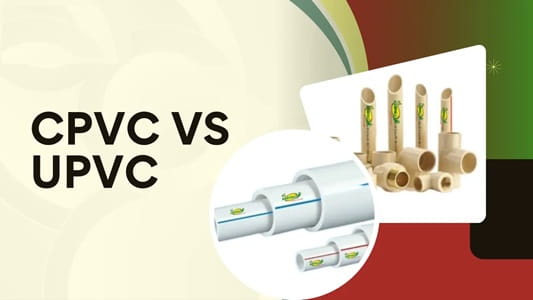
UPVC stands for Unplasticized Polyvinyl Chloride. These are rigid, strong pipes without added plasticizers. They are commonly used for cold water supply and drainage. Popular Indian brands include Supreme, Astral, Finolex, Prince, and Apollo.
What is CPVC Pipe?
CPVC means Chlorinated Polyvinyl Chloride. It is made by adding chlorine to PVC, which makes it stronger and able to handle high temperatures. CPVC is ideal for both hot and cold water lines. Same brands like Astral FlowGuard, Supreme, and Finolex make good CPVC pipes.
Head-to-Head Comparison
-
Temperature Resistance
- CPVC: Excellent. Can handle water up to 93°C (even boiling water). Perfect for Indian homes with geysers, solar heaters, and hot water supply in bathrooms and kitchens.
- UPVC: Limited. Best for cold water only (up to 45–60°C). Not suitable for hot water lines as it can bend or burst.
-
Durability & Strength
- CPVC: More durable for pressure and heat. It has better resistance to chemicals and hard water (common in Delhi, Rajasthan, and North India).
- UPVC: Very strong and rigid for cold water applications. Good impact resistance but can become brittle over time in direct sunlight.
-
Cost
- UPVC: Cheaper. Usually 15–30% less expensive than CPVC. Ideal for budget projects.
- CPVC: Slightly costly but offers better long-term value where hot water is needed. For a typical 2BHK home plumbing, CPVC may cost ₹8,000–15,000 extra.
-
Corrosion & Scaling
Both pipes are non-corrosive (unlike old GI/metal pipes) and do not rust. However, CPVC handles scaling from hard water better due to its smooth inner surface.
-
Pressure Handling
- Both handle normal household pressure well.
- CPVC is generally better for high-pressure areas and multi-storey buildings.
-
Installation & Maintenance
- Both are lightweight and easy to install compared to metal pipes.
- CPVC uses solvent cement jointing and is simple for plumbers.
- UPVC is also easy but requires proper support as it is more rigid. Maintenance is low for both — no painting or rust issues.
-
Safety & Health
Both are safe for drinking water if they have ISI mark and NSF certification. CPVC is widely trusted for potable (drinking) water.
-
Lifespan
With proper installation, both can last 20–50 years. CPVC generally performs better in hot water conditions.
Which One Should You Choose?
Choose CPVC if:
- You need hot water supply (most important point for Indian homes).
- Installing in kitchen, bathroom, or geyser lines.
- Living in multi-storey apartment or high-pressure water system.
- Want one type of pipe for the entire house (hot + cold).
Choose UPVC if:
- Only cold water lines (drinking water, garden, or toilet flush).
- Budget is tight.
- Drainage or waste water lines.
- Outdoor or underground cold water supply.
Smart Recommendation for Indian Homes:
Most experts and plumbers suggest using CPVC for all internal plumbing (hot + cold) and UPVC for drainage and external cold water lines. This combination gives the best performance and safety. Always buy pipes with ISI mark and Schedule 40 or 80 thickness for better strength.
Pro Tip: In areas with very hard water (North India), use CPVC with good quality solvent cement to avoid joint leaks. Get plumbing done by experienced professionals.
Environmental Angle
Both are recyclable and better than metal pipes as they require less energy to produce. Choose brands that follow green manufacturing standards.
Frequently Asked Questions (FAQ)
Q1. Which is better – CPVC or UPVC pipes?
CPVC is better for most home water supply because it handles both hot and cold water. UPVC is good only for cold water and drainage.
Q2. Can I use UPVC for hot water?
No, it is not recommended. UPVC may deform or leak with hot water.
Q3. Which pipe is cheaper?
UPVC is cheaper than CPVC.
Q4. Which pipe lasts longer?
Both last long, but CPVC performs better in real Indian conditions with geysers and hot summers.
Q5. Are these pipes safe for drinking water?
Yes, if you buy reputed brands with ISI and NSF certification.
Q6. What is the price difference?
CPVC costs 15–40% more than UPVC depending on size and brand.
Q7. Best brands in India?
- Astral (very popular for CPVC)
- Supreme
- Finolex
- Prince
- Apollo
Q8. Can I mix CPVC and UPVC in one house?
Yes, but use proper transition fittings at joints.
Final Verdict
CPVC is the better and more practical choice for most modern Indian homes because it safely handles both hot and cold water, offers better durability, and reduces future problems. UPVC is still excellent for cold water and drainage lines where you want to save money.
The best solution is usually a combination of both pipes as per their strengths. Before buying, speak to a trusted plumber and visit a building material shop in your city (like Kirti Nagar in Delhi). Check the thickness, brand, and warranty.
Good plumbing pipes may not be visible, but they protect your home from leaks, water damage, and high repair costs for decades. Choose wisely and enjoy a worry-free water system!