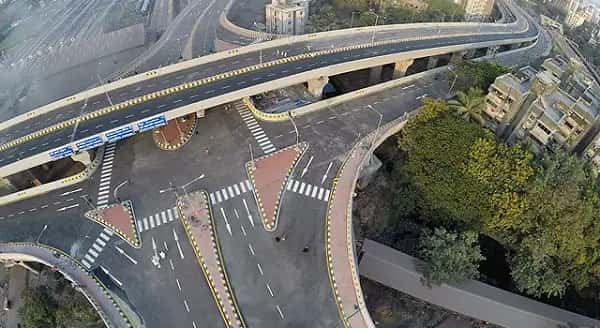
Bengaluru, often called the Silicon Valley of India, is known for its fast-growing infrastructure and heavy traffic. To manage this traffic, the city has developed a large network of flyovers across different areas. When people refer to a “Bengaluru Flyover,” they are usually talking about this broader system of elevated roads that help vehicles move faster by avoiding signals and congested junctions.
Some of the most well-known flyovers in Bengaluru include the Silk Board Flyover, Hebbal Flyover, and Richmond Circle Flyover. These structures play a crucial role in connecting major IT hubs, residential areas, and highways across the city.
The purpose of these flyovers is simple—to reduce traffic congestion and improve travel time in a city that sees lakhs of vehicles on the road every day.
| Parameter | Details |
| Name | Bengaluru Flyover Network |
| Location | Across Bengaluru |
| State | Karnataka |
| Major Areas Covered | Silk Board, Hebbal, KR Puram, Richmond Circle |
| Main Roads | Outer Ring Road, NH-44, NH-75 |
| Purpose | Reduce congestion and improve connectivity |
| Governing Authority | BBMP / NHAI |
| Best For | Daily commuting, IT corridor travel |
Location and Coverage
Flyovers in Bengaluru are spread across the city and are built at major traffic junctions where congestion is high. These include areas like Silk Board Junction, Hebbal, KR Puram, and Electronic City.
Each flyover is strategically located to handle traffic coming from different directions. For example, the Hebbal Flyover connects the airport road with the city, while the Silk Board Flyover connects IT hubs like Electronic City with Outer Ring Road.
These flyovers are not located in one place but are part of a network that covers North, South, East, and Central Bengaluru.
Directions — Getting To and Through Bengaluru Flyovers
Since there are multiple flyovers, directions depend on the specific location you are traveling to.
If you are coming from Kempegowda International Airport, you will likely use the Hebbal Flyover to enter the city.
From Electronic City, the Silk Board Flyover helps you connect to Outer Ring Road and other parts of the city.
If you are traveling from Whitefield, you may use KR Puram Flyover to reach central Bengaluru.
Driving on these flyovers is usually faster than surface roads because they are designed to avoid traffic signals. However, during peak hours (8–11 AM and 5–9 PM), traffic can still be heavy due to high demand.
Routes and Transit Connectivity
Bengaluru flyovers connect several major routes:
Outer Ring Road (ORR)
One of the busiest corridors in the city, connecting IT hubs.
NH-44 (Bellary Road)
Connects the city to the airport and northern regions.
NH-75 (Old Madras Road)
Links Bengaluru to eastern regions.
Electronic City Elevated Expressway
Connects Electronic City with central Bengaluru.
Metro Connectivity
Bengaluru Metro (Namma Metro) runs parallel to several flyovers, providing an alternative mode of transport.
Railway Connectivity
Major stations like Krantivira Sangolli Rayanna (Bangalore City Railway Station) connect the city to the rest of India.
Airport Connectivity
Kempegowda International Airport is accessible via major flyovers like Hebbal.
Public Transport
BMTC buses, autos, and cabs are widely available.
Nearby Places
Since Bengaluru flyovers are spread across the city, nearby places vary depending on the location.
Electronic City
A major IT hub with offices of top companies.
Whitefield
Another IT and residential area.
Hebbal
Known for its lake and connectivity to the airport.
Silk Board Junction
One of the busiest traffic points in the city.
KR Puram
A key junction connecting eastern Bengaluru.
Traffic Conditions and Peak Hours
Traffic conditions on Bengaluru flyovers depend on location and time.
Morning (8–11 AM) and evening (5–9 PM) are the busiest times. During these hours, office commuters, especially those working in IT companies, contribute to heavy traffic.
Even though flyovers reduce congestion, bottlenecks can still occur at entry and exit points.
Late-night and early-morning travel is usually smooth.
Importance of Bengaluru Flyovers
Flyovers in Bengaluru are essential for managing traffic in a rapidly growing city. They reduce travel time and improve connectivity between different areas.
Before these flyovers were built, traffic congestion was much worse, especially at major junctions. The flyovers have helped improve traffic flow significantly.
They are especially important for IT professionals traveling between home and office.
Development and Expansion
Bengaluru continues to expand its flyover network to meet growing traffic demands. New flyovers and underpasses are being constructed in different parts of the city.
Smart traffic management systems and signal-free corridors are also being developed.
Daily Commuting Experience
For daily commuters, flyovers provide a faster route compared to surface roads.
However, during peak hours, traffic can still be slow due to high demand.
Public transport options like metro and buses help reduce dependence on personal vehicles.
Role in IT Corridor Connectivity
One of the biggest advantages of Bengaluru flyovers is their role in connecting IT corridors. Areas like Electronic City, Whitefield, and Outer Ring Road are major employment hubs.
Flyovers help employees reach offices faster and reduce travel stress.
Safety and Driving Tips
Driving on Bengaluru flyovers requires attention:
- Maintain lane discipline
- Follow speed limits
- Be cautious at entry and exit points
- Avoid sudden lane changes
- Watch for heavy traffic
Future Scope and Improvements
Bengaluru is investing heavily in infrastructure. Future projects include new flyovers, metro expansion, and smart traffic systems.
These improvements aim to reduce congestion and improve travel experience.
Conclusion
Bengaluru’s flyover network is a vital part of the city’s transport system. It helps manage heavy traffic and improves connectivity between major areas.
Although congestion still exists, flyovers have made travel faster and more efficient. As the city continues to grow, further infrastructure development will play a key role in shaping the future of transportation in Bengaluru.
FAQ — Bengaluru Flyover
Q1. Why are flyovers important in Bengaluru?
A: They reduce traffic congestion and improve connectivity across the city.
Q2. Which are the busiest flyovers?
A: Silk Board, Hebbal, and KR Puram are among the busiest.
Q3. Is metro connectivity available?
A: Yes, Namma Metro runs across many parts of the city.
Q4. What is the best time to travel?
A: Early morning and late night are less congested.
Q5. Do flyovers completely solve traffic problems?
A: They help significantly but cannot fully eliminate congestion due to high vehicle numbers.