For students who dream of building a career in fashion design, apparel, textiles, accessories, fashion communication or fashion technology, the National Institute of Fashion Technology (NIFT) is one of the most recognised names in India. NIFT campuses have produced professionals who work across fashion brands, retail companies, export houses, design studios, e-commerce businesses and the wider lifestyle industry.
However, getting into NIFT is only one part of the decision. Choosing the right NIFT campus and course is equally important. Older campuses such as Delhi, Mumbai, Bengaluru, Chennai, Hyderabad, Kolkata and Gandhinagar have well-established industry networks, while other campuses can offer strong academic opportunities and a different cost-of-living advantage.
For students targeting NIFT Admission 2026, this guide highlights 10 prominent NIFT campuses based on factors such as institutional legacy, industry exposure, location, course options, alumni network and overall student preference. This is a practical shortlist for aspirants, not an official NIFT ranking, because NIFT does not publish a simple official “top 10 campuses” order for students.
Top 10 NIFT Colleges in India 2026
| Rank | NIFT Campus | Location | Key Advantage |
|---|---|---|---|
| 1 | NIFT Delhi | New Delhi | Strong industry exposure |
| 2 | NIFT Mumbai | Navi Mumbai, Maharashtra | Fashion and entertainment ecosystem |
| 3 | NIFT Bengaluru | Bengaluru, Karnataka | Fashion, retail and technology exposure |
| 4 | NIFT Chennai | Chennai, Tamil Nadu | Textiles and apparel ecosystem |
| 5 | NIFT Hyderabad | Hyderabad, Telangana | Fashion and lifestyle industry exposure |
| 6 | NIFT Gandhinagar | Gandhinagar, Gujarat | Textiles, crafts and design |
| 7 | NIFT Kolkata | Kolkata, West Bengal | Fashion, textiles and traditional crafts |
| 8 | NIFT Patna | Patna, Bihar | Growing design education environment |
| 9 | NIFT Bhubaneswar | Bhubaneswar, Odisha | Craft and textile exposure |
| 10 | NIFT Jodhpur | Jodhpur, Rajasthan | Heritage crafts and textile ecosystem |
Note: Students should verify the final 2026 programme availability, seat matrix, admission dates and counselling information before filling campus preferences.
1. NIFT Delhi
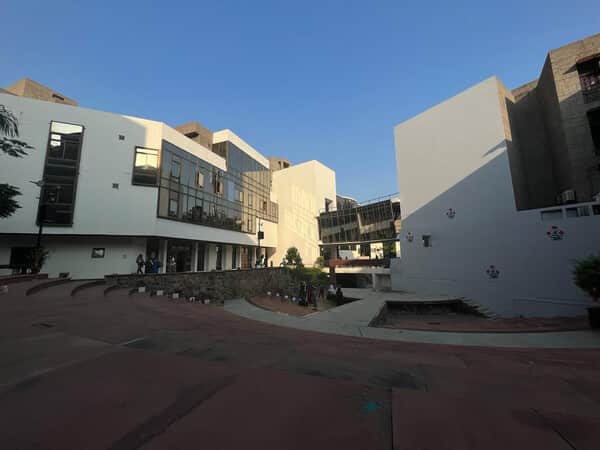
NIFT Delhi is generally one of the most sought-after campuses among NIFT aspirants. Established in the formative years of NIFT, the campus has developed a strong academic and industry reputation.
Its location is a major advantage. Delhi-NCR is home to fashion designers, export houses, retail companies, buying offices, fashion events and major national brands.
Why students prefer NIFT Delhi:
- Established NIFT campus
- Strong alumni network
- Excellent fashion-industry exposure
- Access to Delhi-NCR internships
- Multiple design specialisations
- Competitive learning environment
Popular programmes and specialisations can attract high-ranking candidates, so students targeting NIFT Delhi should prepare a realistic preference list rather than depending on a single campus-course combination.
2. NIFT Mumbai
For students who want to study close to India’s fashion, media and entertainment industries, NIFT Mumbai is a major option.
The campus is located in Navi Mumbai, giving students access to the wider Mumbai metropolitan region.
Mumbai is home to:
- Fashion brands
- Designer labels
- Retail companies
- Advertising agencies
- Film and entertainment businesses
- Fashion photographers
- E-commerce companies
- Lifestyle media
This environment can be particularly useful for students interested in Fashion Communication, Fashion Design and other creative careers requiring professional networking and industry exposure.
Students should, however, budget carefully because living expenses in the Mumbai region can be relatively high.
3. NIFT Bengaluru
NIFT Bengaluru is another highly preferred campus and benefits from being located in one of India’s largest technology and startup centres.
Bengaluru also has a significant fashion, apparel, retail and e-commerce ecosystem.
This combination makes the city particularly interesting for students who want to understand how design increasingly interacts with technology and digital commerce.
Bengaluru can provide exposure to:
- Fashion retail
- E-commerce
- Apparel businesses
- Technology
- Startups
- Digital marketing
- Lifestyle brands
Students interested in the business and technology side of modern fashion may find Bengaluru particularly attractive.
4. NIFT Chennai
NIFT Chennai is an established campus and an important choice for students, particularly those interested in textiles, apparel and fashion.
Tamil Nadu has one of India’s most significant textile and garment ecosystems. Chennai’s location also provides connections with major manufacturing and business centres within the state.
Students can benefit from exposure to areas such as:
- Apparel
- Textiles
- Fashion design
- Leather and accessories
- Manufacturing
- Retail
- Traditional crafts
Students from southern India may also find Chennai convenient in terms of language familiarity, travel and proximity to home, although these should not be the only criteria for campus selection.
5. NIFT Hyderabad
NIFT Hyderabad combines design education with access to one of India’s major metropolitan economies.
Hyderabad has grown rapidly in technology, retail, entertainment, luxury consumption and lifestyle businesses. At the same time, Telangana has a rich textile and craft heritage.
This creates an interesting environment where students can experience both modern fashion businesses and traditional Indian design practices.
Important advantages include:
- Metropolitan location
- Fashion and retail exposure
- Access to craft traditions
- Growing lifestyle market
- Internship possibilities
- Diverse student environment
Students should compare course availability and personal specialisation interests before deciding between Hyderabad and other leading NIFT campuses.
6. NIFT Gandhinagar
NIFT Gandhinagar is particularly interesting because Gujarat has a deep connection with India’s textile, garment, craft and entrepreneurial sectors.
The state is known for traditional textile practices as well as large-scale industrial production.
For a fashion student, this can provide exposure to both sides of the industry.
Students may benefit from exposure to:
- Traditional textiles
- Handicrafts
- Apparel production
- Textile businesses
- Entrepreneurship
- Design development
Its proximity to Ahmedabad also adds access to a major commercial and design ecosystem.
Students interested in textiles, crafts and fashion entrepreneurship should keep Gandhinagar high on their list of potential campuses.
7. NIFT Kolkata
NIFT Kolkata is one of the older NIFT campuses and serves as an important centre for fashion education in eastern India.
West Bengal has a rich tradition of textiles, handlooms, crafts and artistic practices, while Kolkata itself has an active retail, design and cultural environment.
Students can encounter traditional areas such as handloom and craft while learning contemporary design and fashion practices.
Why consider NIFT Kolkata?
- Established campus
- Strong cultural environment
- Textile and craft exposure
- Fashion education
- Access to eastern India’s design market
- Diverse creative influences
For students from eastern and northeastern India, Kolkata can also offer practical advantages in terms of connectivity.
8. NIFT Patna
NIFT Patna has emerged as an important fashion-education option in eastern India.
Bihar has a strong heritage of crafts and textiles, including traditions such as Madhubani art and other regional practices that can provide inspiration for design students.
The campus can be a good option for students who want NIFT education while studying in a comparatively less expensive city than Mumbai, Delhi or Bengaluru.
Students should evaluate:
- Preferred course availability
- Campus facilities
- Hostel availability
- Industry projects
- Internship opportunities
- Recent placement information
A campus should not be rejected simply because it is younger than the first-generation NIFT centres.
9. NIFT Bhubaneswar
NIFT Bhubaneswar provides another important option in eastern India.
Odisha has an exceptionally rich craft and textile heritage, including weaving, appliqué, handloom and other traditional practices.
This surrounding cultural environment can be valuable for students studying design because fashion increasingly draws on sustainable materials, traditional techniques and regional craftsmanship.
NIFT Bhubaneswar can appeal to students interested in:
- Fashion design
- Textile traditions
- Craft-based design
- Sustainable fashion
- Indian handlooms
- Contemporary design applications
Bhubaneswar is also developing as an educational and commercial centre, adding to its appeal for students.
10. NIFT Jodhpur
NIFT Jodhpur is located in Rajasthan, a state internationally recognised for its textiles, embroidery, printing, handicrafts, jewellery and traditional design.
For fashion students, this cultural setting can become an important learning resource.
Jodhpur and the wider Rajasthan region offer exposure to:
- Traditional textiles
- Block printing
- Handicrafts
- Fashion accessories
- Heritage design
- Artisan communities
Students interested in combining Indian craft traditions with contemporary fashion can find this environment particularly useful.
Popular Courses Offered Through NIFT
NIFT education is not limited to Fashion Design.
Depending on the campus and current programme availability, undergraduate options can include specialisations such as:
- Fashion Design
- Leather Design
- Accessory Design
- Textile Design
- Knitwear Design
- Fashion Communication
- Bachelor of Fashion Technology
At postgraduate level, NIFT also offers programmes in areas such as design, fashion management and fashion technology.
Not every course is offered at every campus, so students should first decide their preferred programme and then identify campuses offering it.
How to Get Admission to NIFT in 2026
Admission to NIFT programmes follows the institute’s prescribed entrance and selection process.
For the 2026 admission cycle, students should rely on the official admission prospectus for exact dates, eligibility and examination requirements.
Depending on the programme, the selection process can involve components such as:
- General Ability Test (GAT)
- Creative Ability Test (CAT)
- Situation Test for applicable design programmes
- Programme-specific selection requirements
The exact process differs between B.Des., B.F.Tech. and postgraduate programmes.
Students should therefore avoid preparing for every NIFT course using exactly the same strategy.
How to Choose the Best NIFT Campus
The “best” NIFT is not necessarily the same for every student.
Suppose you receive your preferred specialisation at one campus but a less-preferred course at a more famous campus. In that situation, think carefully about your long-term career rather than selecting purely on campus reputation.
Compare these factors:
- Preferred course
- Campus reputation
- Faculty and laboratories
- Studio facilities
- Industry exposure
- Internship opportunities
- Alumni network
- City and fashion ecosystem
- Hostel availability
- Total fees
- Living expenses
- Recent placement outcomes
For design careers, your portfolio, practical skills, internships and creativity can eventually matter as much as the campus name.
Career Options After NIFT
A NIFT qualification can lead to many different career paths depending on the programme and individual skills.
Graduates can explore roles such as:
- Fashion designer
- Textile designer
- Fashion stylist
- Accessory designer
- Fashion illustrator
- Visual merchandiser
- Fashion communicator
- Fashion buyer
- Product developer
- Apparel technologist
- Fashion marketer
- Retail professional
Students can also build independent labels, work with artisan businesses, enter e-commerce or pursue postgraduate education.
The fashion industry increasingly values digital skills, sustainability knowledge, branding, communication and business understanding alongside traditional design abilities.
FAQs
1. Which is the No. 1 NIFT college in India in 2026?
A. NIFT Delhi is generally one of the most preferred and established NIFT campuses because of its legacy, alumni network and access to the Delhi-NCR fashion industry. However, NIFT does not provide a simple official ranking declaring one campus permanently No. 1.
2. Which NIFT campuses are best after Delhi?
A. NIFT Mumbai, Bengaluru, Chennai, Hyderabad, Gandhinagar and Kolkata are among the prominent established campuses students commonly consider. The better choice depends strongly on your preferred course, entrance performance, location and career goals.
3. Should I choose a better NIFT campus or my preferred course?
A. For many students, course preference deserves greater importance because it determines what you will study intensively for several years. A preferred specialisation at another strong NIFT campus may be more suitable than accepting a course you do not enjoy simply for a particular campus name.
4. Is NIFT only for students who want to become fashion designers?
A. No. NIFT offers pathways into textiles, accessories, fashion communication, apparel production, fashion technology, management, retail and related fields. Graduates can work in design, manufacturing, branding, e-commerce, merchandising and many other areas of the fashion and lifestyle industry.