Getting a good JEE Main score does not mean that your engineering choices are limited to IITs and NITs. India also has a group of Government-Funded Technical Institutes (GFTIs) that participate in the JoSAA/CSAB admission ecosystem and can offer excellent opportunities in engineering, technology, planning and related fields. For many students, the right GFTI can provide a strong combination of academic quality, affordable education, established reputation and career opportunities.
GFTIs are not all identical. Some are universities with a long academic history, while others specialise in areas such as information technology, infrastructure, food technology or engineering. Their fees, programmes, campus facilities, admission cut-offs and placement outcomes can therefore vary significantly.
For students planning admission in 2026, the following list highlights 10 prominent GFTIs worth considering. It is a practical shortlist based on academic reputation, national rankings where applicable, programmes, institutional standing and student opportunities rather than an official government ranking of GFTIs.
Top 10 GFTI Colleges in India 2026
| Rank | College | Location | Popular Areas |
|---|---|---|---|
| 1 | BIT Mesra | Ranchi, Jharkhand | CSE, ECE, Engineering |
| 2 | PEC Chandigarh | Chandigarh | CSE, ECE, Mechanical, Aerospace |
| 3 | JNU School of Engineering | New Delhi | CSE, ECE |
| 4 | University of Hyderabad | Hyderabad, Telangana | Engineering & Technology |
| 5 | Assam University | Silchar, Assam | CSE, ECE, Agricultural Engineering |
| 6 | Sant Longowal Institute of Engineering and Technology | Longowal, Punjab | Engineering & Technology |
| 7 | Shri Mata Vaishno Devi University | Katra, Jammu & Kashmir | CSE, ECE, Mechanical |
| 8 | Central University of Rajasthan | Ajmer, Rajasthan | Engineering & Technology |
| 9 | NIFTEM-Kundli | Sonipat, Haryana | Food Technology & Management |
| 10 | National Institute of Advanced Manufacturing Technology | Ranchi, Jharkhand | Manufacturing, Mechanical, Metallurgy |
Important: GFTI participation and seat matrices can change between admission years. Students should check the official JoSAA 2026 participating-institute and seat-matrix information before filling their choices.
1. Birla Institute of Technology, Mesra
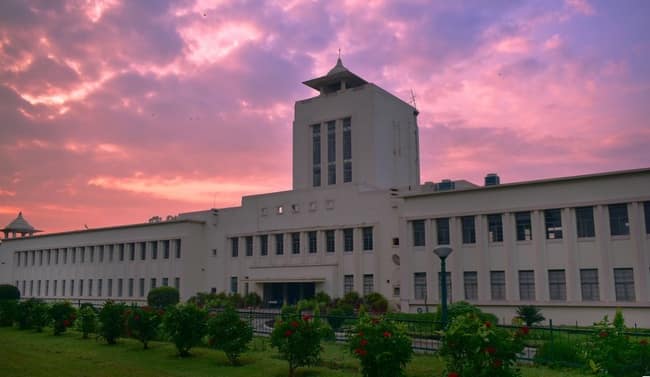
Birla Institute of Technology (BIT), Mesra is one of the most recognised institutes appearing within the GFTI category in JoSAA counselling.
Located near Ranchi, BIT Mesra has a long history of technical education and offers engineering programmes across several disciplines.
It is especially popular among JEE Main aspirants because of its established academic reputation and industry presence.
Why students consider BIT Mesra:
- Established engineering institution
- Strong alumni network
- Multiple B.Tech branches
- Research and technical facilities
- Active student culture
- Industry exposure
Computer Science and Engineering is among its most competitive programmes, so students interested in BIT Mesra should study previous JoSAA opening and closing ranks carefully.
One important point is that the term GFTI in counselling should not be confused with every institute having exactly the same ownership or fee structure. Always check the institute’s individual status and current fee schedule.
2. Punjab Engineering College, Chandigarh
Punjab Engineering College (Deemed to be University), Chandigarh, commonly known as PEC Chandigarh, has a long history in engineering education.
Its location in Chandigarh and established alumni network make it a highly attractive option for many JEE Main candidates.
Popular engineering areas include:
- Computer Science
- Electronics and Communication
- Electrical Engineering
- Mechanical Engineering
- Aerospace Engineering
- Civil Engineering
PEC can be particularly attractive for students looking for an established engineering environment outside the IIT and NIT system.
Its popular branches can have competitive JoSAA cut-offs, so preference planning is important.
3. JNU School of Engineering, New Delhi
Jawaharlal Nehru University is widely known for social sciences, languages and research, but its School of Engineering has also become an option for engineering aspirants.
JNU offers integrated dual-degree engineering programmes in areas such as Computer Science and Engineering and Electronics and Communication Engineering combined with social-science specialisations.
The New Delhi location provides access to a large academic, startup, technology and research ecosystem.
JNU can appeal to students interested in:
- Engineering with interdisciplinary education
- Computer science
- Electronics
- Research
- Technology combined with social sciences
- Studying within a major central university
Students should check the exact degree structure before choosing JNU because its engineering programmes may differ from a conventional four-year B.Tech offered by many other institutions.
4. University of Hyderabad
The University of Hyderabad (UoH) is a prominent central university with a strong reputation for postgraduate education and research.
Its engineering and technology-related programmes can be attractive to students who value an academically intensive university environment.
The university’s location in Hyderabad is another advantage. Hyderabad is one of India’s major centres for:
- Information technology
- Software services
- Startups
- Research
- Pharmaceuticals
- Technology companies
Before placing the university on the JoSAA preference list, students should verify the exact undergraduate programme available through the relevant 2026 counselling process.
Do not assume that every engineering programme at a university is necessarily offered through JoSAA.
5. Assam University, Silchar
Assam University is a central university located in Silchar, Assam. Its engineering programmes are offered through the Tribhuwan School of Science and Technology.
It can be an important GFTI option for students from Northeast India as well as candidates from other states seeking a central-university engineering environment.
Engineering disciplines associated with the university include areas such as:
- Computer Science and Engineering
- Electronics and Communication Engineering
- Agricultural Engineering
Students should consider academic facilities, branch availability, hostel arrangements and recent placement information when comparing Assam University with other GFTIs.
For a student who prioritises a particular branch over institute brand alone, it can become a useful JoSAA preference.
6. Sant Longowal Institute of Engineering and Technology
Sant Longowal Institute of Engineering and Technology (SLIET) is located at Longowal in Punjab.
The institute has a technical and engineering-focused academic environment and offers programmes across multiple disciplines.
Areas can include:
- Computer Science and Engineering
- Electronics and Communication
- Electrical Engineering
- Mechanical Engineering
- Chemical Engineering
- Food Engineering
- Instrumentation-related fields
SLIET’s specialised technical focus can appeal to students who want an engineering-oriented campus rather than a broad multidisciplinary university.
Before choosing it, compare the curriculum and placement outcomes of your preferred branch rather than looking only at an overall institutional placement figure.
7. Shri Mata Vaishno Devi University
Located near Katra in Jammu & Kashmir, Shri Mata Vaishno Devi University (SMVDU) is another institute that engineering aspirants may encounter through the GFTI admission route.
The university offers engineering education alongside programmes in other academic disciplines.
Its residential campus environment can be attractive to students looking for a focused university experience.
Popular areas include:
- Computer Science and Engineering
- Electronics and Communication Engineering
- Mechanical Engineering
- Other technology-related disciplines
Students considering SMVDU should compare fees carefully because GFTIs do not necessarily have the same fee structure as NITs.
Location, travel requirements and hostel expenses should also be included in the family’s total education budget.
8. Central University of Rajasthan
Central University of Rajasthan (CURAJ) is located in Rajasthan and has expanded its academic offerings across science, technology and other disciplines.
For engineering aspirants, it can provide an alternative within a central-university academic environment.
A central university can offer useful interdisciplinary exposure because students may interact with departments outside traditional engineering fields.
Before adding CURAJ to the 2026 choice list, check:
- Current engineering programmes
- JoSAA participation
- Seat matrix
- Branch-specific curriculum
- Hostel availability
- Recent placement data
This is particularly important because programmes and counselling participation can evolve from one admission cycle to another.
9. NIFTEM-Kundli
Students interested in food processing rather than conventional CSE or mechanical engineering should pay attention to the National Institute of Food Technology Entrepreneurship and Management (NIFTEM), Kundli.
Located in Sonipat, Haryana, the institute specialises in the food sector.
Its academic environment connects areas such as:
- Food technology
- Food processing
- Food engineering
- Supply chains
- Entrepreneurship
- Food-sector management
This makes NIFTEM fundamentally different from a general engineering college.
A student interested in India’s growing food-processing industry may find this specialisation more valuable than selecting a conventional branch solely because it is available elsewhere.
10. National Institute of Advanced Manufacturing Technology, Ranchi
The National Institute of Advanced Manufacturing Technology (NIAMT), Ranchi has a strong technical orientation towards manufacturing and related engineering areas.
Students may also recognise the institution by its earlier identity associated with the National Institute of Foundry and Forge Technology.
Its specialised history makes it particularly relevant for students interested in core engineering and manufacturing.
Areas of interest include:
- Manufacturing
- Mechanical engineering
- Metallurgy
- Materials
- Production-related technologies
- Advanced industrial processes
Students aiming for careers in manufacturing, automotive, metals or core engineering should not evaluate NIAMT only through the lens of software placements.
Its specialised technical focus can be an advantage for the right student.
How to Get Admission to GFTIs in 2026
For participating GFTIs, undergraduate engineering admission is primarily based on JEE Main performance through the applicable JoSAA/CSAB process.
Unlike IIT admission, students do not generally need JEE Advanced for these JEE Main-based GFTI seats.
The broad admission process is:
- Appear for JEE Main 2026.
- Obtain a valid JEE Main rank.
- Satisfy the applicable academic and eligibility requirements.
- Register for JoSAA counselling.
- Fill institute and programme choices.
- Receive seat allotment based on rank, category, preferences and seat availability.
- Complete online reporting and required payments.
- Participate in subsequent rounds where applicable.
- Consider CSAB rounds for eligible vacant seats if available.
Candidates should follow the official 2026 counselling schedule because dates, rules and participating institutes may change.
GFTI vs NIT: What Is the Difference?
NITs form a specific group of National Institutes of Technology established within their own statutory framework.
GFTI, in the counselling context, is a broader category containing participating technical institutes funded or supported through different government or institutional structures.
Therefore, two GFTIs can differ significantly in:
- Fees
- Campus size
- Academic structure
- Placement system
- Hostel facilities
- Scholarships
- Institutional governance
Students should never assume that every GFTI operates exactly like an NIT.
How to Select the Best GFTI in 2026
Do not create your JoSAA preference list only from an online “Top 10” ranking.
A better approach is to compare institutes according to your preferred branch and career objectives.
Check these factors:
- JEE Main rank
- Previous opening and closing ranks
- Preferred branch
- Curriculum
- Faculty and laboratories
- Internship opportunities
- Recent placement statistics
- Median salary rather than only highest package
- Total tuition fees
- Hostel and living costs
- Campus environment
- Location
- Alumni network
- Higher-study opportunities
A strong branch at a suitable GFTI can sometimes be a better personal choice than accepting an unwanted branch elsewhere merely for the institution’s name.
Do Placements Make a GFTI Worth Choosing?
Placements are important, but they should not be the only deciding factor.
Placement outcomes can differ dramatically between CSE, electronics, mechanical, civil, food technology and other programmes within the same institution.
Instead of focusing only on a viral “highest package”, examine:
- Branch-wise placement percentage
- Median or average compensation
- Number of participating students
- Core-sector recruiters
- Internship opportunities
- Higher-study outcomes
- Types of job roles offered
Your own skills, projects, internships, academic performance and communication ability will ultimately have a major influence on your career.
FAQs
Q1. Which is the best GFTI in India for 2026?
A. There is no official government ranking that declares one GFTI the best. BIT Mesra and PEC Chandigarh are among the most prominent choices commonly considered by JEE Main aspirants, but the better option depends on branch, fees, rank, location and career goals.
Q2. Is JEE Advanced required for admission to GFTIs?
A. For B.Tech seats at participating GFTIs filled through the JEE Main/JoSAA system, JEE Advanced is generally not required. Students need a valid JEE Main rank and must satisfy the applicable admission eligibility conditions.
Q3. Can I get a GFTI with a low JEE Main rank?
A. Possibly. Cut-offs vary considerably according to institute, programme, category, seat type and counselling round. Less competitive branches and later JoSAA or eligible CSAB rounds may provide opportunities, but previous cut-offs should be treated only as guidance rather than guaranteed 2026 cut-offs.
Q4. Should I choose a GFTI CSE seat over a lower-preference branch at an NIT?
A. It depends on your priorities. If you genuinely want computer science, a suitable GFTI offering CSE may be preferable to taking a branch you have little interest in at an NIT. Compare curriculum, placements, fees, institute reputation and long-term career goals before making the final choice.